As an Amazon Associate, we earn from qualifying purchases. This post contains affiliate links – if you buy through them, we may earn a commission at no extra cost to you.
Troubleshooting a Ford F-150 check engine light can feel overwhelming when you see that dashboard warning. Many owners worry they need expensive professional help, but often, the issue is simple to identify with the right information. This guide helps you understand how to use tools and manuals to decode those alerts yourself. For most owners, the OBD2 Scanner Code Reader is the best starting point because it provides immediate, actionable data from your truck’s computer.
What Actually Matters
Real-Time Diagnostic Data
A good tool does more than show a code; it shows live data. Look for real-time sensor displays to confirm if a part is failing or just sending a temporary signal.
Compatibility and Protocols
Not every scanner works with every truck year. Generic tools may read basic codes but miss manufacturer-specific data needed for complex issues.
Clarity of Instructions
Manuals and guides vary between technical repair steps and general troubleshooting. Beginners should prefer step-by-step guides over dense shop manuals. Look for clear illustrations and simple language.
Ease of Use
Consider how you want to interact with the data. Tools use either handheld screens or apps. Handheld units are more reliable as they don’t depend on wireless pairing or phone battery life.
1. Haynes Ford Pick-Ups Manual

Best for: Comprehensive vehicle repair and maintenance reference.
This manual covers a wide range of model years, making it a solid desk reference for those who prefer physical books. It’s based on a complete teardown and rebuild, which gives you a look at how components fit together. The manual lacks information on electronics.
Pros
- Based on complete vehicle teardown
- Covers multiple model years
- Detailed assembly information
- Reliable physical reference
Cons
- Lacks digital diagnostic capabilities
- Large volume to store
2. OBD2 Scanner Code Reader

Best for: Instant diagnostic feedback and clearing codes.
This tool is designed specifically for OBD-II protocols, allowing you to read and clear engine codes directly. Its wired design and built-in screen eliminate the need for phone apps or Bluetooth. It’s highly practical for driveway troubleshooting.
This scanner isn’t for owners who want a deep, narrative explanation of how to fix complex engine systems.
Pros
- Reads and clears engine codes
- Displays live operating data
- No phone app required
- Convenient handheld design
Cons
- Functions depend on vehicle ECU
- Wired connection limits movement
3. Check Engine Light Decoded

Best for: Understanding diagnostic codes and warning lights.
This guide is focused on interpreting the language of your truck’s computer. It helps you bridge the gap between seeing a code and knowing what it actually means for your vehicle’s health. It’s ideal for those who feel intimidated by technical diagnostic reports.
Pros
- Simplifies diagnostic code meaning
- Explains modern vehicle systems
- Educational for new owners
- Useful for general troubleshooting
Cons
- Contains no repair instructions
4. FORD F-150 COMPLETE DIY REPAIR AND SERVICE MANUAL 2015-2026

Best for: Beginners needing structured maintenance guidance.
This manual is tailored for those new to truck ownership and maintenance. It covers the basics of engine care and common repairs in a way that’s easy to follow. It’s a great starting point for someone who wants to handle basic tasks at home.
This manual lacks advanced technical data. It focuses on accessibility, which may limit the depth for high-level repairs.
Pros
- Designed for beginners
- Covers common repair tasks
- Includes fluid change guides
- Easy to follow steps
Cons
- Limited advanced technical data
5. Ford F-150 Problems and Solutions

Best for: Identifying common issues across multiple generations.
If you want to know what usually goes wrong with your specific F-150 generation, this guide is an excellent resource. It covers engine, transmission, and electrical systems, helping you narrow down the source of a check engine light by focusing on known failure points.
Pros
- Covers broad model range
- Focuses on common issues
- Includes electrical system tips
- Good for quick diagnosis
Cons
- Requires filtering for your model
6. Ford F-150 Repair & Maintenance Manual (2004–2014 Models)

Best for: Fixing issues based on observable symptoms.
This manual starts with the problem you see or hear. If you notice a performance issue, this guide directs you to the fix. It’s very practical for those who don’t yet have a diagnostic code.
This manual is limited to 2004–2014 models. If your truck is newer or older, solutions may not align with your engine.
Pros
- Symptom-led diagnostic approach
- Covers V6 and V8 engines
- Includes EcoBoost information
- Practical repair focus
Cons
- Limited to specific model years
7. F-150 Repair for Beginners
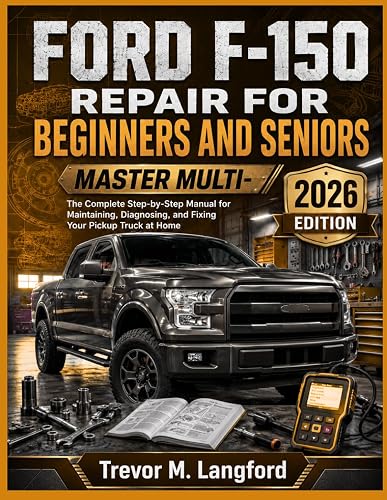
Best for: Step-by-step home repair assistance.
This guide emphasizes routine maintenance and diagnostics. It’s built for beginners who want clear instructions without complex talk. It’s perfect for keeping your truck running without a shop.
Pros
- Very clear instructions
- Good for home maintenance
- Focuses on common tasks
- Step-by-step format
Cons
- Lacks professional-level depth
8. F-150 Independent Owner Guide

Best for: Independent owners performing driveway repairs.
This guide is for owners wanting to avoid professional shops. It covers diagnosis and maintenance for 2015–2020 models.
It is limited to the specified date range. If you have an older or newer model, the instructions might not be accurate, and you should look for a guide tailored to your specific model year.
Pros
- Highly relevant for specific years
- Encourages independent maintenance
- Covers diagnosis and repair
- Clear focus for owners
Cons
- Specific to 2015–2020 only
9. Check Engine Diagnosis Guide

Best for: Learning OBD-II troubleshooting basics.
This guide teaches the process of diagnosing engine lights. It explains the relationship between warning lights and codes.
It teaches you how to think through a problem, but you’ll still need a separate manual or online resource to find the specific torque settings or part numbers for your F-150.
Pros
- Excellent for learning basics
- Explains OBD-II systems
- Good for general diagnostics
- Accessible language
Cons
- No vehicle-specific repair steps
10. 1986 FORD truck shop manual ENGINE light bronco econoline F-150

Best for: Vintage F-150 shop maintenance.
This is a shop manual for the 1986 model year. It provides the original technical data to keep these trucks on the road.
This manual is not for modern trucks. It contains no information on modern OBD-II scanners or computer-controlled systems found in trucks from the 1990s onward.
Pros
- Essential for 1986 models
- Original factory-style data
- Detailed shop procedures
- Reliable for vintage repair
Cons
- No modern diagnostic info
Who Should Buy Which
If you want the most reliable way to diagnose a light, get the OBD2 Scanner Code Reader; it provides real-time data that saves you guessing. For those who want to fix the truck themselves, the Haynes Ford Pick-Ups Manual or F-150 DIY Repair Manual are the best companions. If you’re driving a vintage 1986 model, the 1986 Ford Truck Manual is your only choice for accuracy.
Mistakes That Lead to Ford F-150 Check Engine Light Troubleshooting
- Buying a scanner that doesn’t support the protocols for your specific Ford F-150 model year.
- Choosing a complex shop manual when you only need a simple, beginner-friendly maintenance guide for basic tasks.
- Assuming that a diagnostic code identifies the exact part to replace, rather than the system where the issue exists.
- Relying on a generic guide that covers too many generations, leading to confusion about which instructions apply to your truck.
For most owners, the OBD2 Scanner Code Reader is the best tool to identify engine issues quickly.
Related guides
- Mangoal Front 4K Rear 1080P Dash Cam For Ford Trucks
- How to Check Car Tire Pressure at Home: 10 Best Picks
- Ford Review: Reliable Features and Top Benefits Explained
Frequently Asked Questions
Can I drive with the check engine light on?
You should treat the light as a warning to check your system soon. If the light is flashing, stop driving immediately, as this often indicates a severe engine misfire.
How do I clear the check engine light?
You can use a scanner to clear the code, but the light will return if the underlying issue isn’t fixed. Always diagnose and repair the fault first.
Does the scanner work on all vehicles?
This tool is designed for OBD-II compliant vehicles. While it works for many F-150 models, always check your truck’s year and supported protocols against the scanner’s specifications before buying.
Is it hard to use a scanner?
Most modern handheld scanners use simple menus and physical buttons. You plug it into the port under your dashboard and follow the prompts on the screen to read codes.
Do I need a professional to fix every issue?
Many codes relate to simple sensors or loose parts that you can fix at home. Use your repair manual to determine if the job is within your comfort level.
Conclusion
Taking care of your truck doesn’t have to be a stressful chore. If you still feel unsure after checking the codes, don’t hesitate to reach out to a trusted local mechanic for a second opinion. You’ll find that staying proactive keeps your vehicle running smoothly, so you can enjoy your next drive worry-free.