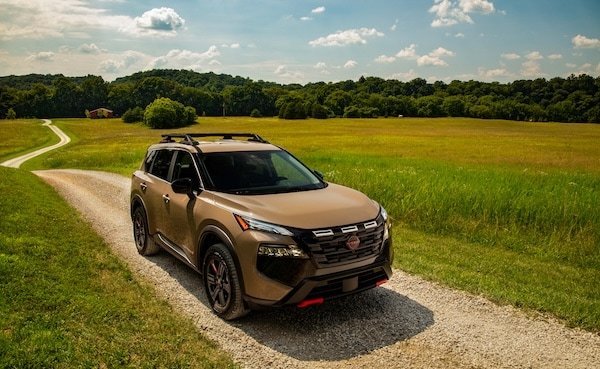
The Nissan Rogue and Toyota RAV4 are the two best-selling compact SUVs in America, and they take opposite approaches to the same job. The RAV4 leans on hybrid efficiency and resale strength; the Rogue counters with a lower price, a smoother ride, and a nicer cabin for the money. This Nissan Rogue vs Toyota RAV4 comparison breaks down pricing, fuel economy, space, and reliability so you can pick the one that fits your driveway.
Key Takeaways
- The RAV4 starts around $29,000–$30,500; the Rogue starts around $27,000–$28,500 — a real but not huge gap.
- RAV4 Hybrid returns roughly 39–41 mpg combined; the Rogue tops out near 33–37 mpg with its variable-compression engine.
- Toyota’s resale value consistently beats Nissan’s, which changes the true five-year cost.
- The Rogue offers a third-row option on some trims; the RAV4 does not.
- Both include standard driver-assist suites — Nissan Safety Shield 360 and Toyota Safety Sense.
- Test-drive both back-to-back: the Rogue rides softer, the RAV4 feels more planted.
What You’ll Pay Up Front
Neither SUV is cheap anymore, but the gap matters. Nissan discounts more aggressively, so out-the-door pricing often favors the Rogue by $1,500–$3,000 once incentives land.
| Trim Level | Nissan Rogue | Toyota RAV4 |
|---|---|---|
| Base | ~$27,000–$28,500 | ~$29,000–$30,500 |
| Midrange | ~$31,000–$34,000 | ~$32,000–$35,500 |
| Loaded | ~$38,000–$40,000 | ~$38,000–$40,500 |
| Hybrid | Not offered | ~$31,500–$40,000 |
Pro Tip: Compare financed prices, not MSRPs. Nissan’s 0% APR offers can save more than a sticker discount.
Fuel Economy and Powertrains
This is where the RAV4 pulls away. Toyota’s hybrid system is the reason — it’s been refined for two decades and needs no plug.
| Model | Combined MPG | Drivetrain |
|---|---|---|
| RAV4 (gas, AWD) | ~27–30 | 2.5L 4-cyl |
| RAV4 Hybrid | ~39–41 | Hybrid AWD |
| Rogue (FWD) | ~33–37 | 1.5L turbo 3-cyl |
| Rogue (AWD) | ~31–34 | 1.5L turbo 3-cyl |
The Rogue’s variable-compression turbo is clever engineering, but the RAV4 Hybrid wins on real-world fuel bills. The EPA’s fuel economy comparison tool lets you plug in your own annual mileage and local gas prices.
Interior Space and Comfort
Both seat five comfortably. The Rogue’s Zero Gravity seats are genuinely supportive on long drives, and its cabin materials look a class above the price. The RAV4 has a more upright, truck-like seating position some drivers prefer.
- Cargo behind row two: Rogue ~36–37 cu ft; RAV4 ~37–38 cu ft
- Cargo folded: Rogue ~74 cu ft; RAV4 ~69 cu ft
- Rear legroom: roughly even, both generous
- Third row: Rogue only, and it’s tight — kids only
Which Has the Better Back Seat?
The Rogue’s rear bench reclines and slides on many trims, which helps with car seats. The RAV4’s rear seat is fixed but roomier in shoulder width.
Technology and Safety
Every RAV4 includes Toyota Safety Sense 2.5+: adaptive cruise, lane tracing, automatic braking, and blind-spot monitoring on most trims. The Rogue counters with Safety Shield 360 plus ProPILOT Assist, which handles highway steering and stop-and-go traffic well.
Both earned top marks from the Insurance Institute for Highway Safety — check the IIHS ratings pages for the exact model year, since criteria tighten annually.
Warning: Standard safety tech varies by trim. Verify the specific window sticker rather than assuming.
Reliability and Resale Value
Toyota’s reputation here is earned. The RAV4 routinely lands near the top of long-term dependability surveys, and its resale value after five years typically runs 10–15 percentage points above the Rogue’s. Nissan’s CVT transmissions have historically drawn more owner complaints, though the current design is improved.
Pro Tip: If you keep cars past 100,000 miles, the RAV4’s higher resale and lower repair risk usually erase its price disadvantage.
Which One Should You Buy?
Choose the RAV4 if fuel economy, resale, and long-term reliability top your list — especially the Hybrid. Choose the Rogue if you want the lowest monthly payment, a plusher ride, and available third-row flexibility.
Quick Decision Guide
- Long commuter? RAV4 Hybrid.
- Budget-focused? Rogue with incentives.
- Keeping it 10 years? RAV4.
- Want the nicest cabin? Rogue.
- Need occasional 7 seats? Rogue.
Related guides
- 10 Best Portable Jump Starters for Cars and SUVs in 2026
- 10 Best Windshield Sun Shades for Cars, SUVs, and Trucks
- Best Toyota Car Product Uses: Top Picks & Honest Reviews
Frequently Asked Questions
Is the Nissan Rogue or Toyota RAV4 more reliable?
Toyota generally wins. The RAV4 has a stronger record in long-term dependability studies and fewer transmission complaints. The Rogue has improved, but its CVT history still affects used-car perceptions and resale pricing.
Which SUV is cheaper to own?
The RAV4 usually costs less over five years. It burns less fuel in hybrid form and holds value better, offsetting its higher purchase price. The Rogue wins only on upfront cost and insurance in some states.
Does the Rogue have a third row?
Some Rogue trims offer a third row, but it’s best for small children on short trips. The RAV4 offers no third row at all.
Is the RAV4 Hybrid worth the extra money?
For most drivers, yes. The fuel savings plus stronger resale typically repay the premium within a few years, and the hybrid needs no charging.
Which has more cargo space?
They’re close. The RAV4 edges ahead behind the second row; the Rogue wins with seats folded, thanks to its lower load floor.
Do both come with all-wheel drive?
Yes, both offer AWD on most trims. The RAV4 Hybrid includes electric AWD standard on many configurations.
Conclusion
Start by test-driving the RAV4 Hybrid and a midtrim Rogue on the same day, then price both with your insurance agent and a five-year fuel estimate. That single afternoon will tell you more than any spec sheet.