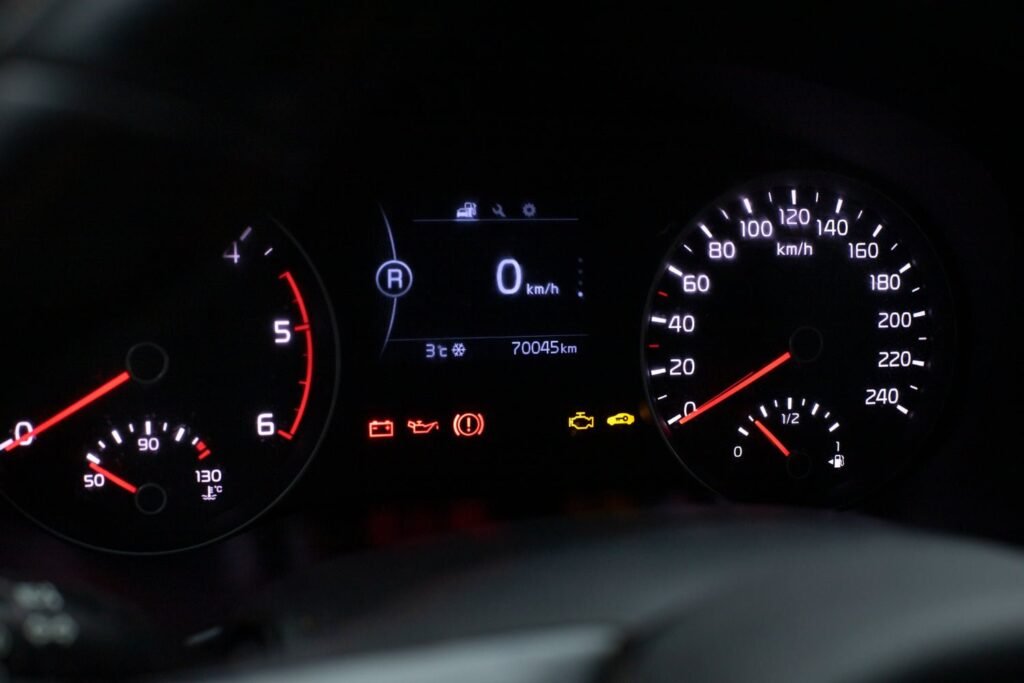
What Does the ABS Warning Light Mean on a Dashboard? Is often more than just a glitch. People buy tools with limited features that miss brake faults, leaving them stuck with a blinking light and unsafe brakes.
What Buyers Get Wrong
Buying the wrong version for your car
Many folks grab any scanner that says “ABS” but miss their specific model year. The listing for What Does the ABS Warning Light Mean on a Dashboard? Shows some tools only work on older cars or specific brands.
Chasing features that sound cool but fail
Active tests look great on paper but often don’t work on every single vehicle.
Ignoring the detail sellers leave out
Some listings hide that they can’t reset lights until the real fault is gone.
Accepting a compromise that gets returned fast
A basic reader might miss critical data like live sensor graphs needed for deep fixes.
What Did Not Make the List
We set aside listings that lacked clear compatibility details or claimed universal support without proof. We also skipped tools that didn’t clearly state whether they supported ABS or just engine codes.
1. FOXWELL NT630 Plus OBD2 Scanner with ABS and SRS

Avoids the trap of: buying a tool that can’t bleed your brakes properly. This scanner stands out because it handles ABS auto-bleed functions on supported vehicles. Confirm your exact setup before buying. It’s built for those who need professional-level diagnostics at home without a subscription fee.
Pros
- Supports ABS auto-bleed for trapped air removal after service.
- Provides live data and graphing for wheel-speed sensors.
Cons
- Can’t perform ECU coding or programming on new modules.
- Doesn’t support transmission system scans or battery testing.
2. Autel AutoLink AL619 OBD2 Scanner

Avoids the trap of: getting a device that ignores newer OBDII protocols. The AL619 covers 10 modes of OBDII diagnostics and reads ABS/SRS codes effectively. You get lifetime software updates and a USB cable to print reports for your records.
Pros
- Reads and clears codes for both ABS and SRS systems accurately.
- Offers DTC lookup to find definitions without searching online.
- Includes print data function via USB connection to a PC.
Cons
- Incompatible with any vehicle manufactured after the year 2015.
- ABS diagnostics aren’t universally compatible across all brands.
3. INNOVA 3020RS Fast & Easy-to-Use Check Engine Code Reader

Avoids the trap of: struggling to understand complex error codes alone.
The hardware itself is a basic OBD2 reader that lacks deep ABS module control. You rely heavily on the mobile app for the detailed repair advice rather than the tool’s screen.
Pros
- Free mobile app provides verified fixes and part recommendations instantly.
- Displays code severity to prioritize urgent repairs immediately.
- Checks smog status and emission readiness before your state inspection.
Cons
- Requires a separate smartphone app for advanced diagnostic features.
- Hardware screen is limited compared to dedicated professional scanners.
4. EXTRACTME OBD2 Scanner Bluetooth with AI Assistant & No Subscription
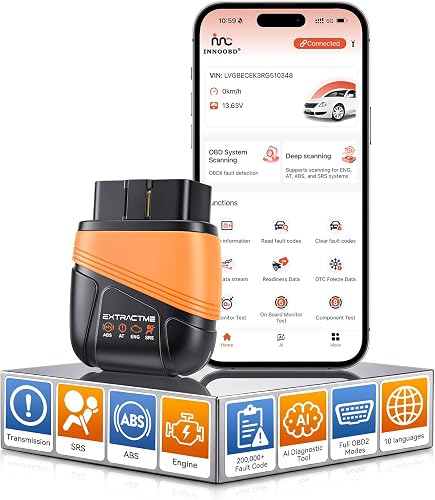
Avoids the trap of: paying hidden fees for essential diagnostic features.
You must pair it with a smartphone app to see the results on a screen. The tool itself has no display, which might feel less convenient than a handheld unit.
Pros
- No subscriptions or hidden fees required for full feature access.
- AI assistant analyzes fault codes and suggests possible causes automatically.
- Bluetooth 5.1 ensures stable connections even in complex electronic environments.
Cons
- Lacks a built-in screen, requiring a smartphone for operation.
- Relies on third-party app compatibility for the best user experience.
5. LEE-3 OBD2 Bluetooth Scanner Engine AT ABS SRS Four-System Code

Avoids the trap of: buying a scanner that fails on older communication protocols.
Like other Bluetooth-only units, it needs a phone to display the data streams. You won’t get a physical screen on the dongle itself for quick glances.
Pros
- Automatically adapts to various vehicle communication protocols for stability.
- Covers four major systems including ABS and SRS with deep scans.
- Includes performance testing features like acceleration and braking analysis.
Cons
- No built-in display; requires a smartphone for all data viewing.
- Limited to 44 specific brands rather than universal global coverage.
6. Autel Maxilink ML619 OBD2 Scanner

Avoids the trap of: missing manufacturer-specific codes that generic readers ignore. As an upgraded version of the AL619, this tool retrieves generic, manufacturer-specific, and pending codes. The TF card slot allows for data backup and easy software upgrades on the go. It supports multilingual menus for users who speak languages other than English.
Pros
- Retrieves manufacturer-specific codes that generic readers often miss completely.
- Stores and replays live data streams for later troubleshooting sessions.
- Supports multilingual menus including Spanish and French for wider use.
Cons
- Doesn’t support vehicle models manufactured after the year 2015.
- Requires a Windows PC for printing diagnostic data reports.
7. Autel OBD2 Scanner AutoLink AL549 Code Reader with AutoVin Diagnostic

Avoids the trap of: ignoring battery health when diagnosing electrical faults. This tool adds a unique battery test function to check the starting and charging systems. The color-coded fault display makes it easy to spot issues at a glance. It includes lifetime free updates to keep the database current for years.
Pros
- Includes battery and charging system testing for complete electrical checks.
- Color-coded fault display simplifies identifying the source of errors.
- Supports latest car models up to 2023-2025 for general OBD2.
Cons
- ABS diagnosis function doesn’t work on cars newer than 2020.
- Battery test requires strict adherence to on-screen guidance steps.
8. OBD2 Scanner Code Reader Car Diagnostic Tool

Avoids the trap of: needing batteries or external power sources for basic scans. This tiny device plugs directly into the 16-pin connector and draws power from the car. The LCD screen shows over 3000 generic code definitions right on the tool itself.
Pros
- Powered directly by the vehicle with no batteries or cables needed.
- Fits in the palm of your hand for ultra-portable convenience.
- Displays over 3000 generic error code definitions on the screen.
Cons
- No live data streaming or graphing capabilities for deeper analysis.
-
Can’t perform active tests on ABS pumps or valves.
-
Measure your garage space to ensure the scanner fits comfortably.
- Check your VIN to confirm the tool supports your specific ABS system.
- Verify your phone’s Bluetooth version matches the scanner’s requirements.
- Confirm the warranty period covers your intended usage duration.
One of the biggest traps is buying a scanner that can’t read your specific brake system codes.
Related guides
- Best Car Cleaning Tools And Kits for a Spotless Ride Every Time
- Caddilac Escalade Diecast Model Car with Sound and Light Features
- What to Do Before Getting Car Tinted: Essential Prep Tips and Tools
Frequently Asked Questions
Is the simplest one on this list enough?
Yes, if you just need to clear a light and see a code definition. The basic OxGord reader handles this job. It works well for quick checks but won’t diagnose complex brake failures.
What if it turns out to be the wrong one?
Check the return policy if your car isn’t listed. Contact support with your vehicle details to verify.
What gives out or runs out first?
The software database often becomes outdated faster than the hardware itself. Ensure you choose a tool with free lifetime updates to stay current.
Which trap catches most people twice?
Ignoring the vehicle year limit causes the most repeated mistakes and returns. Many buyers assume “OBD2” means universal support, but ABS functions vary wildly. Always double-check the compatibility list for your exact model year.
As an Amazon Associate, we earn from qualifying purchases. This post contains affiliate links – if you buy through them, we may earn a commission at no extra cost to you.