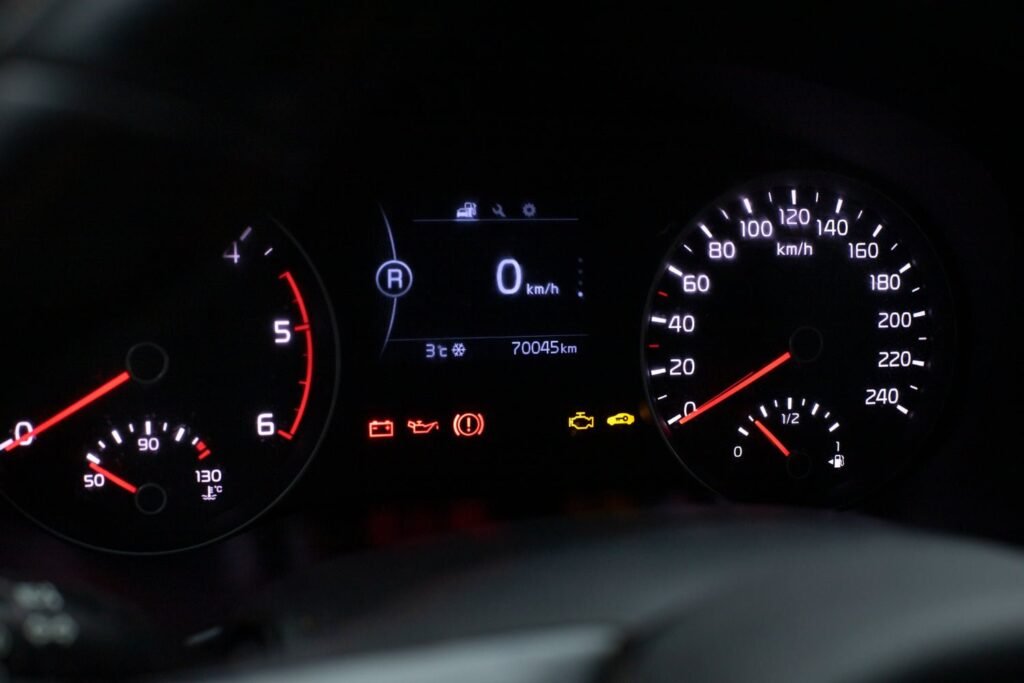
The check engine light is on because the car’s computer spotted a problem — usually a loose gas cap, a failing oxygen sensor, a bad catalytic converter, an ignition misfire, or a mass airflow sensor issue, which are the most common causes.
Common Causes of a Check Engine Light
- Loose or missing gas cap. The most common and cheapest cause. Your fuel system is sealed, and a cap that isn’t tight lets vapors escape and trips the light. Tighten it until it clicks and drive a few days.
- Failing oxygen sensor. This sensor measures exhaust gases so the computer can adjust the fuel mix. When it wears out, fuel economy drops and the light comes on steadily.
- Bad catalytic converter. Often the result of ignoring a smaller problem for months. Expect sluggish acceleration and sometimes a rotten-egg smell from the exhaust.
- Ignition misfire — spark plugs or coils. You’ll feel it: the engine stumbles, shakes at idle, or hesitates when you accelerate. This is the one cause that needs fast action.
- Mass airflow sensor. It measures how much air enters the engine. A dirty or failing one causes rough running, stalling, and poor fuel economy.
- Emissions system leaks or faults. Hoses, valves, and sensors in the vapor-recovery system age and crack, especially on older cars.
What the Light’s Behavior Means
A steady light means a fault worth checking soon. A flashing light means the engine is misfiring badly enough to overheat and destroy the catalytic converter — ease off the gas and get the car checked immediately.
| Symptom | Most likely cause | What to do |
|---|---|---|
| Light steady, car runs normally | Loose gas cap or oxygen sensor | Check the cap; if tight, get the code read within days |
| Light flashing, engine shakes | Misfire | Stop hard driving; service immediately |
| Light steady, worse fuel economy | Oxygen sensor or mass airflow sensor | Get the code read; sensor replacement is routine |
| Light steady, rotten-egg smell | Catalytic converter failing | Service within a week or two |
| Light steady, rough idle and stalling | Mass airflow sensor or vacuum leak | Get the code read before replacing parts |
Checks You Can Do Yourself
These are all safe, take minutes, and cost nothing:
- Check the gas cap. Take it off, look for cracked rubber or a broken seal, and screw it back on until it clicks. Then drive for a few days — the light often turns itself off.
- Look for obvious symptoms. Note whether the engine idles roughly, hesitates, uses more fuel than usual, or smells strange. These clues narrow the cause fast.
- Read the code yourself. An OBD2 scanner costs about the same as one shop visit, plugs into a port under the dashboard, and shows the exact fault code. Many auto parts stores will read the code for free if you’d rather not buy one.
- Tighten anything loose under the hood. A visibly cracked or disconnected air hose can trigger the light. Don’t unplug sensors or pull parts — just look.
Tip: Write the code down before you clear it. Clearing the light without fixing the cause just hides the problem — and the code history helps a mechanic diagnose it faster.
Fix It Yourself or Call a Mechanic?
If the code points to a gas cap or a clogged air filter, you can handle it. An oxygen sensor or spark plug swap is doable with basic tools if you’re comfortable working under the hood. Anything involving the catalytic converter, the fuel system, or a flashing light belongs with a mechanic — and never ignore a flashing light to save money, because a cooked catalytic converter turns a small repair into a major one.
Related guides
- Kia Check Engine Light: Common Causes Explained
- Kia Check Engine Light: Common Causes Explained
- BMW Check Engine Light: Common Causes and Next Steps
Frequently Asked Questions
How long can I drive with the light on?
If the light is steady and the car feels normal, a few days is usually fine. If it’s flashing, or the engine shakes, stalls, or overheats, stop driving as soon as you safely can.
Why did my check engine light come on after I filled up?
That’s usually the gas cap. If the cap wasn’t tightened until it clicked, the system detects the leak and triggers the light.
Can the light turn off by itself?
Yes, if the fault was temporary — a loose cap, a one-time misfire, or a sensor glitch. The computer rechecks the fault and clears the light if the problem doesn’t return.
Will disconnecting the battery reset the light?
It can, but it also wipes the computer’s readiness monitors, which many states check during emissions testing. Reading the code first is almost always the smarter move.
Why does the light come on in cold weather but not in summer?
Cold, damp mornings can cause a brief misfire or a marginal sensor to register once. If it recurs every cold start, the code will eventually stay.
Conclusion
A steady light is your car asking for a checkup, not declaring an emergency — but the code is the only way to know which. Pick up a cheap OBD2 scanner or stop by a parts store for a free read, and you’ll go from guessing to knowing in ten minutes.