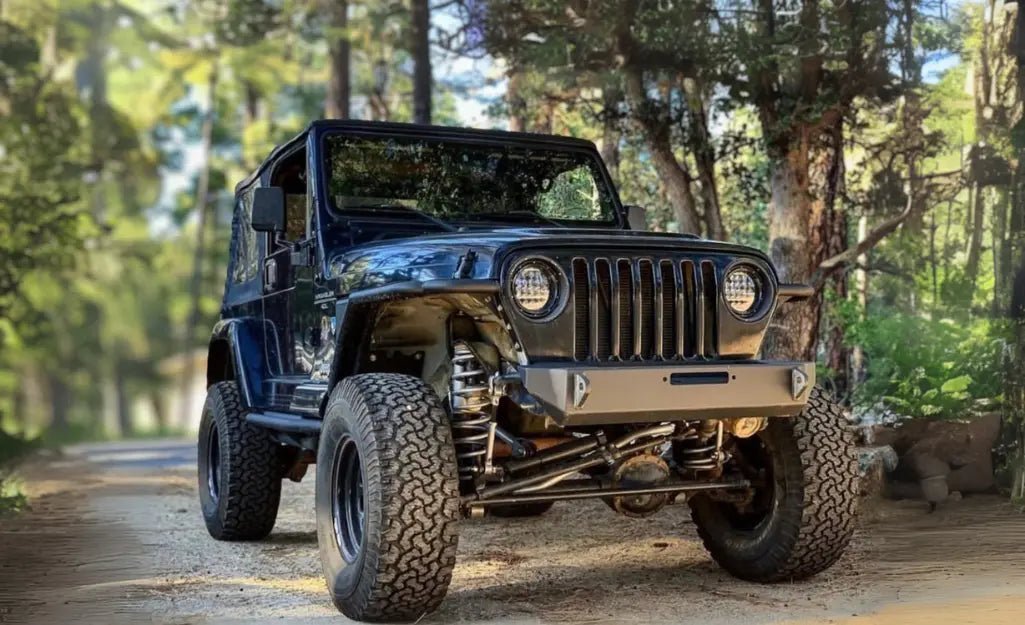
The choice between the Jeep Grand Cherokee and the Cherokee comes down to size, power, and price. The Grand Cherokee starts around $40,000–$42,000, while the Cherokee slots in around $30,000–$33,000 — roughly a $10,000 gap that buys you more room, more muscle, and more towing capability.
Key Takeaways
- The Grand Cherokee is a midsize-plus two-row (or three-row) SUV; the Cherokee is a compact crossover.
- Expect roughly a $10,000 price gap: Cherokee from about $30,000–$33,000, Grand Cherokee from about $40,000–$42,000.
- Grand Cherokee tows up to about 6,200–7,200 lbs depending on engine; the Cherokee tops out near 4,000–4,500 lbs.
- The Cherokee offers better fuel economy and easier city parking; the Grand Cherokee offers more cargo volume and passenger space.
- Both offer Jeep’s proven 4×4 systems, including Quadra-Trac and, on the Grand Cherokee, air suspension.
- The Cherokee was discontinued for the US market after 2023 and returns as a redesigned 2025+ model, so used and new availability differ.
Jeep Grand Cherokee vs Cherokee: Size Differences
This is where the two models diverge most. The Grand Cherokee is a large two-row SUV roughly 193 inches long, with an optional three-row L version that stretches past 205 inches. The Cherokee is a compact crossover around 183 inches long (newer versions are a bit shorter), seating five only.
| Spec | Cherokee | Grand Cherokee |
|---|---|---|
| Rows of seats | 2 (5 passengers) | 2 standard, 3 on L |
| Length | ~166–183 in | ~193 in (L: ~205 in) |
| Max cargo volume | ~55–68 cu ft | ~70–85 cu ft |
| Third-row option | No | Yes (Grand Cherokee L) |
If you regularly haul kids, dogs, and gear, the Grand Cherokee’s extra cargo room and available third row are decisive.
Price and Value for Money
| Model | New price range | Used sweet spot |
|---|---|---|
| Cherokee | ~$30,000–$33,000 | ~$15,000–$25,000 (2019–2022) |
| Grand Cherokee | ~$40,000–$65,000+ (trims to Summit) | ~$20,000–$40,000 (2018–2022) |
The Grand Cherokee’s higher trims climb quickly — Overland and Summit models can push past $60,000 — while the Cherokee’s lineup stays flatter.
Engines, Power, and Towing
The Cherokee has used a 2.4L four-cylinder, a 2.0L turbo four, and the well-regarded 3.2L V6, with towing topping out around 4,000–4,500 lbs. The Grand Cherokee offers a 3.6L V6 standard, an optional 5.7L V8 (up to roughly 7,200 lbs towing), and a 4xe plug-in hybrid.
Off-Road Capability: Which Is More Capable?
Both are genuine Jeeps. The Cherokee offers Trailhawk trim with skid plates, higher ground clearance, and an active drive locking rear differential. The Grand Cherokee counters with Trailhawk and Trailhawk 4xe trims, available Quadra-Lift air suspension, and more ground clearance overall.
Fuel Economy and Running Costs
| Metric | Cherokee | Grand Cherokee |
|---|---|---|
| Combined mpg (gas) | ~23–27 | ~19–22 |
| Hybrid option | No | Yes (4xe plug-in) |
| Insurance/typical upkeep | Lower | Higher |
The 4xe plug-in hybrid can drive short commutes on electricity alone. Maintenance costs run higher on the Grand Cherokee simply because there’s more vehicle — bigger brakes, bigger tires, more complex suspension.
Reliability: What Owners Report
Neither model is a reliability standout, but the Cherokee’s 2014–2018 years drew complaints about the nine-speed automatic transmission’s shifting. The Grand Cherokee’s 3.6L V6 is widely considered durable, though air suspension and Uconnect electronics can be pricey fixes out of warranty.
Which One Should You Buy?
- Buy the Cherokee if you want a $30K-ish commuter SUV with light off-road ability, easy parking, and lower running costs.
- Buy the Grand Cherokee if you need three rows, tow over 4,500 lbs, or want a near-luxury interior at Overland and Summit trims.
- Buy the Grand Cherokee L if you regularly carry seven people.
- Consider a used Grand Cherokee if space matters more than a new-car warranty — the value gap is significant.
Related guides
Frequently Asked Questions
Is the Grand Cherokee bigger than the Cherokee?
Yes, substantially. The Grand Cherokee is about 10–12 inches longer, with roughly 15–20 additional cubic feet of cargo space and an optional third row.
Is a Jeep Grand Cherokee a 7-seater?
Only the Grand Cherokee L, introduced for 2021, offers three rows and seats six or seven. The standard Grand Cherokee is a two-row, five-passenger SUV.
Do Jeep Cherokees hold their value?
Moderately. Jeeps hold value better than average, but the Cherokee depreciates faster than the Grand Cherokee. Expect the Cherokee to retain roughly 45–55% of value after three years, per typical market data.
Which Jeep SUV is best for snow?
Both handle snow well with 4×4 and proper tires. The Grand Cherokee edges ahead with available Quadra-Lift air suspension and Selec-Terrain modes, but a Cherokee with winter tires is plenty for most drivers.
Is the Jeep Cherokee discontinued?
The previous-generation Cherokee ended US production after the 2023 model year. Jeep has launched a redesigned Cherokee for the 2025+ lineup, so availability depends on model year.
Are Grand Cherokees expensive to maintain?
Somewhat. Expect annual maintenance in the $500–$700 range versus $400–$500 for the Cherokee, with air suspension and V8 items adding cost.
Conclusion
You can compare current trims, specs, and pricing directly on Jeep’s official Grand Cherokee page before visiting a dealer. Then take both models on the same test-drive route — highway, parking lot, and a rough back road — and the size-versus-efficiency tradeoff will make your decision obvious within ten minutes.